
Progress Reports Are Out: Does Your Student Need Help? How Educational Resources Help Students Thrive
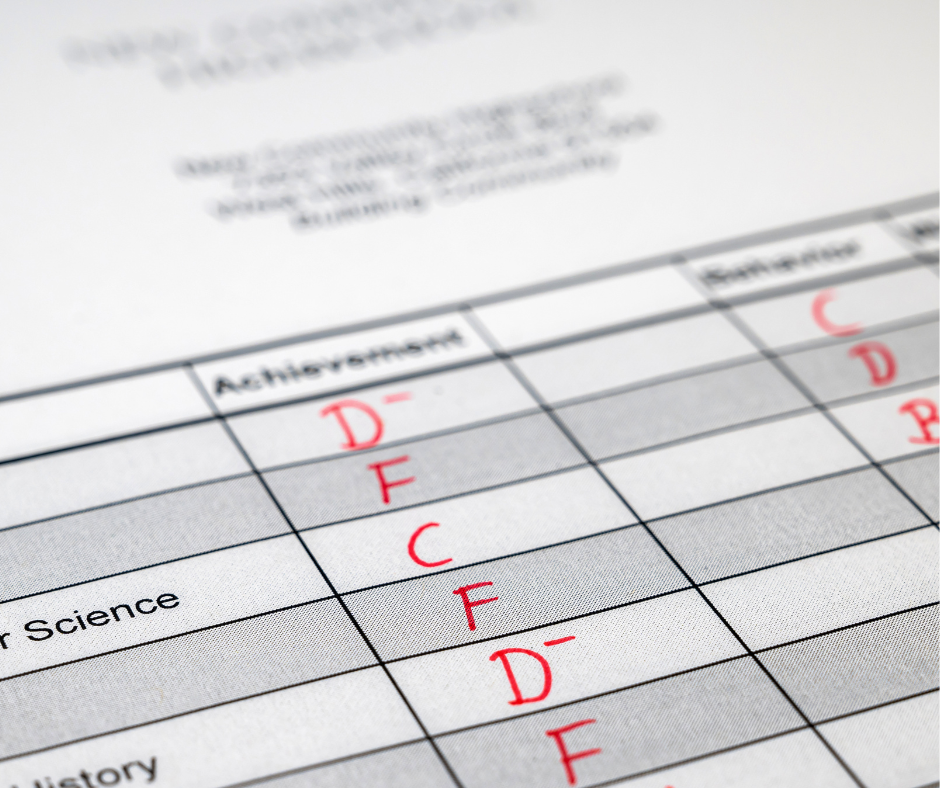
The notification pings on your phone, or perhaps a crumpled piece of paper is pulled reluctantly from a backpack. It’s progress report time. For some parents, this is a moment of high-fives and refrigerator magnets. For others, it’s a moment of pause, concern, or confusion.
Seeing a grade that is lower than expected can be unsettling. You might see a "C" in math when your child usually gets "A's," or a comment from a teacher about struggling to focus during reading time. It is easy to brush these off as a bad few weeks or a difficult unit. However, progress reports are often the first smoke signal before a fire starts. They are valuable checkpoints that tell us not just how a student is doing, but where they might need a different kind of support.
If your child's recent progress report has raised more questions than answers, it might be time to look deeper. Here is how to interpret those warning signs and how Educational Resources can help turn the academic ship around before the final report card arrives.
Decoding the Warning Signs
A progress report is a snapshot in time, but the trends it reveals are often long-term. When reviewing the report, look beyond the letter grade. Teachers often leave comments that are just as telling as the score itself.
The "Slipping" Grade
Sometimes, a drop in grades isn't about lack of effort; it's about hitting a wall in foundational skills. In math, for instance, a student might have breezed through addition and subtraction but is now faltering with multiplication or fractions. This often indicates a gap in conceptual understanding that won't be fixed by just "studying harder."
The Reading Struggle
Comments like "struggles with comprehension," "reads slowly," or "needs frequent redirection" are major flags. Reading is the foundation for almost every other subject. If a student is struggling to decode words or comprehend text, it will eventually impact their science, history, and even math grades (word problems rely heavily on reading skills). These struggles rarely resolve themselves without targeted intervention.
The "Careless Errors"
Do you see notes about missing assignments, incomplete homework, or "rushing through work"? While this can sometimes be a behavioral issue, it is frequently a coping mechanism. Students often rush through work they find too difficult to avoid the anxiety of struggling with it for a long time. It looks like laziness, but it is often avoidance rooted in a lack of confidence.
The Power of the Assessment
If you notice these trends, the worst thing to do is wait and see. Academic gaps compound quickly. A student who misses a key concept in October will likely be lost by December because the curriculum builds upon itself.
This is where a professional assessment becomes your most valuable tool. At Educational Resources, we don't guess what the problem is; we find it.
An assessment acts like an X-ray for learning. It allows us to:
Identify specific gaps: Is your child struggling with reading because of phonemic awareness (sounds) or fluency (speed)? Are they failing algebra because they never mastered negative numbers?
Separate skill from will: We can determine if a student is struggling due to a lack of understanding or if there are executive functioning issues (organization, focus) at play.
Create a baseline: Knowing exactly where a student stands today allows us to measure progress accurately tomorrow.
Targeted Solutions for Every Learner
Once we understand the "why" behind the progress report, we can implement the "how" to fix it. Educational Resources offers a comprehensive suite of programs designed to meet students exactly where they are.
1. The Day School
For some students, the traditional classroom environment is simply too overwhelming or fast-paced. Our Day School offers a smaller, more personalized setting. Here, students receive the individualized attention they need to thrive. It’s not just about catching up; it’s about rediscovering a love for learning in an environment where they feel safe to ask questions and make mistakes.
2. Specialized Reading Intervention
If the assessment reveals a reading struggle, standard tutoring might not be enough. We utilize research-based, multisensory programs like the Orton-Gillingham approach, Wilson Reading System, and Lindamood-Bell programs. These aren't just homework help; they are intensive interventions designed to rewire how the brain processes language. Whether it is decoding, fluency, or comprehension, we have the tools to bridge the gap.
3. Subject-Specific Tutoring
Sometimes, a student just needs a little extra boost in a specific area. Our subject tutors are experts in their fields, from high school calculus to elementary language arts. They don't just help students survive the next test; they help build the study skills and conceptual understanding necessary for long-term mastery.
Don't Wait for the Final Report Card
The beauty of a progress report is right there in the name: it measures progress. It is not a final verdict. There is still time in the semester to change the trajectory.
Intervening now, while the gaps are manageable, is far easier than trying to pull a grade up from the depths in the final weeks of the term. It saves your child from months of frustration and helps restore their confidence before it takes a permanent hit.
If you looked at your student's progress report and felt a knot in your stomach, let us help you untie it. We can provide the clarity, the plan, and the support your child needs to turn those "needs improvement" comments into "exceeds expectations."
Ready to get answers?

About the Author: Lindsay O’Brien
Lindsay O'Brien is the active Executive Director of Educational Resources in Louisville, KY. Previously, she spent over 10 years as a teacher before transitioning to tutoring and standardized test preparation.